Sponsored
Sponsored

Free Edition
Verified Content
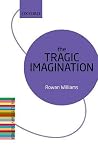
Cosmic Connections: Poetry in the Age of Disenchantment
Overview
In the long-awaited follow-up to The Language Animal , Charles Taylor explores the Romantic poetics central to his theory of language.
The Language Animal , Charles Taylor’s 2016 account of human linguistic capacity, was a revelation, toppling scholarly conventions and illuminating our most fundamental selves. But, as Taylor noted in that work, there was much more to be said. Cosmic Connections continues Taylor’s exploration of Romantic and post-Romantic responses to disenchantment and innovations in language.
Reacting to the fall of cosmic orders that were at once metaphysical and moral, the Romantics used the symbols and music of poetry to recover contact with reality beyond fragmented existence. They sought to overcome disenchantment and groped toward a new meaning of life. Their accomplishments have been extended by post-Romantic generations into the present day. Taylor’s magisterial work takes us from Hölderlin, Novalis, Keats, and Shelley to Hopkins, Rilke, Baudelaire, and Mallarmé, and on to Eliot, Miłosz, and beyond.
In seeking deeper understanding and a different orientation to life, the language of poetry is not merely a pleasurable presentation of doctrines already elaborated elsewhere. Rather, Taylor insists, poetry persuades us through the experience of connection. The resulting conviction is very different from that gained through the force of argument. By its very nature, poetry’s reasoning will often be incomplete, tentative, and enigmatic. But at the same time, its insight is too moving―too obviously true―to be ignored.


36,114 currently reading


152,889 want to read
Sponsored
Sponsored
Book details & editions
| ISBN | 0674296087 |
| Publisher | |
| Publication date | November 2026 |
| Language | English |
| Pages | 365 pages |
Sponsored
Sponsored





Ratings & Reviews
5 ★
58%
4 ★
28%
3 ★
10%
2 ★
3%
1 ★
1%
4.09
BlueReads Choice
Sponsored
Write a Review
Community Reviews
Sort by: