Sponsored
Sponsored
Free Edition
Verified Content
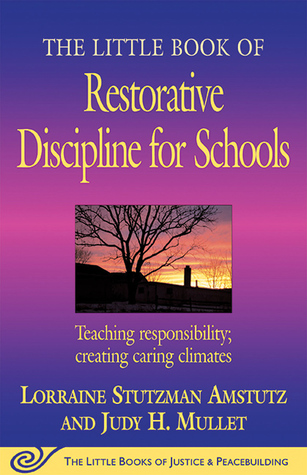
The Little Book of Restorative Discipline for Schools: Teaching Responsibility; Creating Caring Climates (The Little Books of Justice and Peacebuilding Series)
Overview
Can an overworked teacher possibly turn an unruly incident with students into an "opportunity for learning, growth, and community-building"?
If restorative justice has been able to salvage lives within the world of criminal behavior, why shouldn't its principles be applied in school classrooms and cafeterias?
And if our children learn restorative practices early and daily, won't we be building a healthier, more just society?
Two educators answer yes, yes, and yes in this new addition to The Little Books of Justice and Peacebuilding series.
They urge a focus on consequences rather than punishment.
They insist that relationships -- far more than rules -- are central to building community, and that community fosters caring and belonging.
They put up with no hypocrisy: teachers and administrators must live restorative practices, too. So how does it all work?
Stutzman and Amstutz offer applications and models. Among them are class meetings for 5th graders; reintegration of 7th- and 8th- graders who were suspended; circle processes, which offer space for all voices to be heard, and also quiet tensions that are building; and community conferencing when trouble shapes up between students and neighbors.
"Discipline that restores is a process to make things as right as possible." This Little Book shows how to get there.
If restorative justice has been able to salvage lives within the world of criminal behavior, why shouldn't its principles be applied in school classrooms and cafeterias?
And if our children learn restorative practices early and daily, won't we be building a healthier, more just society?
Two educators answer yes, yes, and yes in this new addition to The Little Books of Justice and Peacebuilding series.
They urge a focus on consequences rather than punishment.
They insist that relationships -- far more than rules -- are central to building community, and that community fosters caring and belonging.
They put up with no hypocrisy: teachers and administrators must live restorative practices, too. So how does it all work?
Stutzman and Amstutz offer applications and models. Among them are class meetings for 5th graders; reintegration of 7th- and 8th- graders who were suspended; circle processes, which offer space for all voices to be heard, and also quiet tensions that are building; and community conferencing when trouble shapes up between students and neighbors.
"Discipline that restores is a process to make things as right as possible." This Little Book shows how to get there.


36,114 currently reading


152,889 want to read
Sponsored
Sponsored
Book details & editions
| ISBN | 1561485063 |
| Publisher | |
| Publication date | November 2005 |
| Language | English |
| Pages | 323 pages |
Sponsored
Sponsored



Ratings & Reviews
5 ★
42%
4 ★
34%
3 ★
16%
2 ★
5%
1 ★
3%
3.85
BlueReads Choice
Sponsored
Write a Review
Community Reviews
Sort by: