Sponsored
Sponsored

Free Edition
Verified Content
Child of Fortune
Overview
By conventional Japanese standards, Koko Mizuno is an abysmal
failure as woman, wife, and mother--and she couldn't care less. She has succeeded in remaining true to herself in a stubborn struggle against powerful conformist pressures. Yet her resistance is largely passive.Self-absorbed, indecisive, she makes her own uncharted way through life,letting her husband, lovers, even her only daughter, gradually slip away.
Signs that she is pregnant after a casual affair rouse her to make decisions. Then a deeply ironic turn of events thrusts her into the cold light of a reluctant self-knowledge. Through layer upon layer of dreams,memories, defenses, and delusions, she emerges finally to take a conscious step toward the independence she cannot yet define, certain only that she herself has changed.
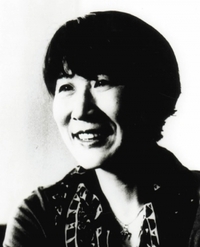
In Child of Fortune, Yuko Tsushima has brought to life a woman whose psychological complexity reflects the meeting of Japanese fiction and women's changing consciousness. The depths of inner conflict are illuminated here by radiant imagery, wry humor, and a sharp clarity of vision.
While drawing on the "I-novel" tradition that has dominated modern Japanese literature, the author integrates the autobiographical elements into a fully realized fictional work of penetrating social insight.
The novel received the 1978 Women's Literature Prize, one of many awards that have spotlighted Yuko Tsushima as a writer of exceptional gifts.


36,114 currently reading


152,889 want to read
Sponsored
Sponsored
Book details & editions
| ISBN | 4770015240 |
| Publisher | |
| Publication date | January 1978 |
| Language | English |
| Pages | 388 pages |
Sponsored
Sponsored


Ratings & Reviews
5 ★
42%
4 ★
34%
3 ★
16%
2 ★
5%
1 ★
3%
3.66
BlueReads Choice
Sponsored
Write a Review
Community Reviews
Sort by: